+48 453 250 842
 office@bitpeak.com
 Opatowska 2, Warsaw




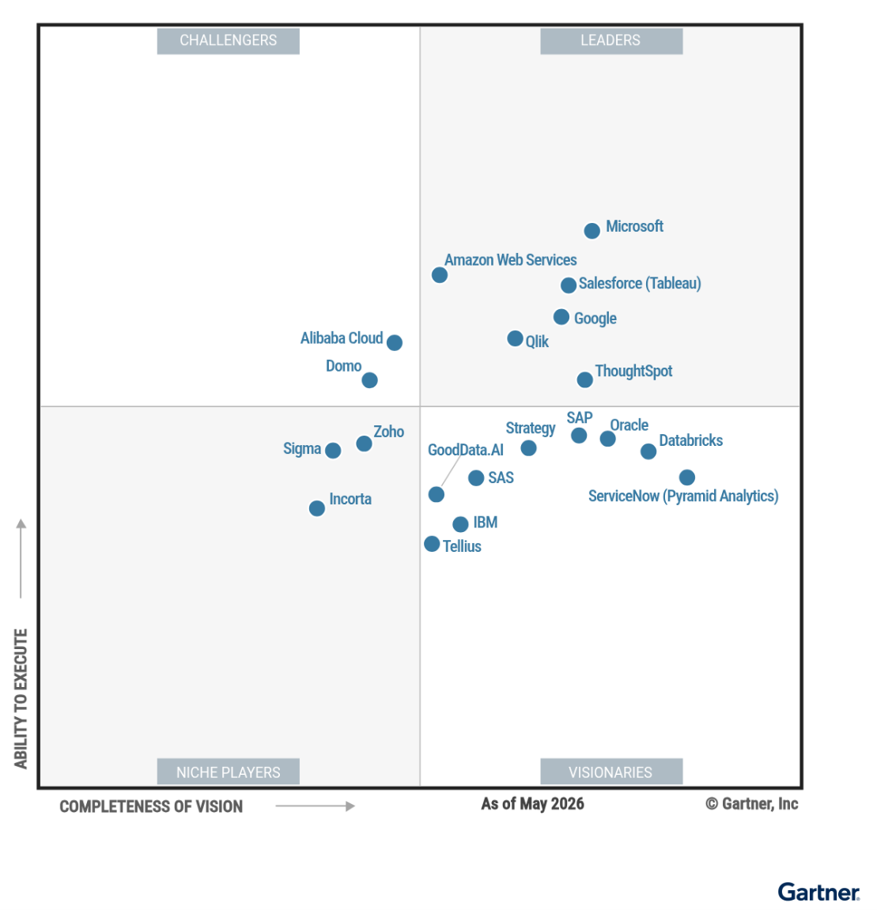
In the latest industry rankings, such as the Gartner Magic Quadrant for Analytics and Business Intelligence Platforms, SAP appears mainly in the context of its cloud tool, SAP Analytics Cloud (SAC).
The reports say nothing about SAP BusinessObjects (BO). When modern analytics comes up in informal conversations, the names mentioned most often are Power BI, Tableau or Qlik.
One might think that BusinessObjects – a tool that has been on the market for over 30 years and was acquired by SAP in 2008 – is already a digital relic. But the reality in the IT departments of large enterprises tells a completely different story.
Scale that migration cannot match
SAP BusinessObjects is still the analytical foundation in thousands of organizations around the world. At BitPeak we work every day with BO environments that serve from a dozen up to even 40 thousand active reports.
When ideas of a full migration to tools such as Power BI appear in such companies, IT departments quickly run into brutal calculations:
- Pixel-perfect formatting: Operational reports, predefined documents for printing and official financial statements must look exactly the same at every run. Moving their specifics to tools aimed at ad-hoc dashboards is extremely difficult and labor-intensive.
- Advanced scheduling and distribution (Scheduling & Bursting): Next to pixel-perfect formatting, this is the second most important strength of BO, which modern cloud platforms often fail to match. For years the tool has been known for a powerful and reliable engine that allows mass generation, personalization and distribution of thousands of reports in various formats (PDF, Excel, HTML) directly to e-mail, FTP servers or – what SAP adds in BI 2027 – cloud drives such as Google Drive and Microsoft OneDrive. Recreating such complex distribution (publication) logic in a new environment is a huge architectural challenge. Moreover, in the new BI 2027 version SAP unifies and modernizes the schedule management interface itself (in the BI Launch Pad and the CMC), which further eases the work of administrators.
- Cost and risk: Rebuilding thousands of complex queries and business logic is a multi-year project, generating a huge budget and the risk of reporting downtime.
The result? The business’s final decision is very often to stay with SAP BusinessObjects.
The roadmap to 2031 and beyond
Let us recall the history: around 2020, the message from SAP was uncompromising. With the launch of the 4.3 line, a hard deadline was set – BusinessObjects was to finally die at the end of 2025, and customers were faced with a fait accompli and pressure to migrate to the cloud-based SAP Analytics Cloud (SAC).
However, the market response and the resistance of key enterprise customers proved so strong that the vendor had to hastily revise its plans. The prospect of losing thousands of market giants to the competition forced SAP to change its strategy from “killing off” to “maintaining and drastically slimming down”.
In the updated Statement of Direction, SAP officially admitted:
“With more than 30 years of innovations, SAP BusinessObjects BI equips thousands of companies which reliably manage enterprise reporting use cases at scale. Our revised maintenance strategy guarantees Mainstream Maintenance until at least end of 2031…”
SAP moved away from the old numbering (4.1, 4.2, 4.3) to releases named after the year of launch (BI 2025, BI 2027, BI 2029). The new roadmap guarantees Mainstream Maintenance until at least the end of 2031, and Customer Specific Maintenance reaches as far as 2033.
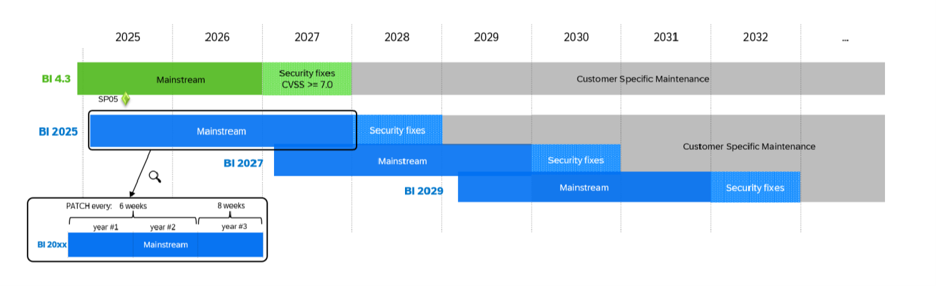
SAP Strategy: “Ditch the rest, keep the core”
We should not, however, succumb to the illusion that SAP is investing in breakthrough BO development to win new customers. The vendor’s goal is purely defensive: keep the current customer base while radically lowering its own code maintenance costs (TCO).
These actions resemble throwing unnecessary ballast overboard:
- Only the foundations: SAP focuses solely on what BO is unmatched at – mass reporting in Web Intelligence (WebI) and Crystal Reports.
- Purge: Everything that is not part of the absolute “core” is being cut. Gone from the platform are the old UNV universe format and the Universe Design Tool (UDT), the Crystal Reports for Enterprise (CR4E) tool, and also side modules (among others Live Office, Analysis for OLAP, support for AIX/Solaris, or traditional SAML in favor of OAuth/OpenID).
- Changes on a living organism: The haste in the vendor’s decisions is visible – interactive features introduced in BI 2025 are already marked as deprecated in the BI 2027 announcements and replaced by a new approach to responsive layouts (Responsive Layout).
What the end of UNV means for IT
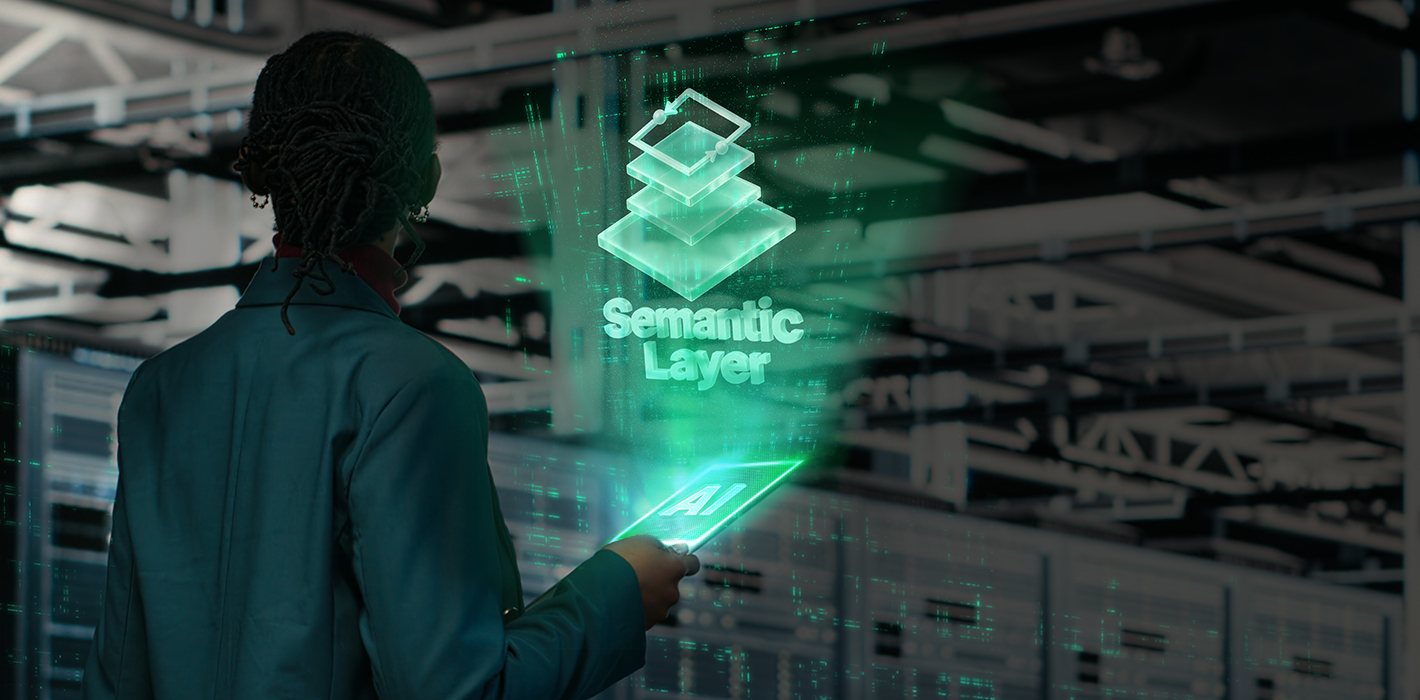
For the system architecture, the key change is the final farewell to the UNV format. Up to version 4.2, the semantic layer was built in the classic Universe Design Tool (UNV) or the newer Information Design Tool (UNX). In BI 2025, the UDT tool and support for UNV were removed from the product entirely.
What does this mean in practice?
- From the business user’s point of view: UNX introduces no limitations. People who consume Web Intelligence reports or carry out analyses will not notice a change after moving from UNV to UNX – the data structure and logic are preserved.
- From the IT department’s point of view: This is a huge operational challenge. Converting universes, precisely “repointing” hundreds or thousands of existing reports to the new UNX format, and flawless validation of results require time, accuracy and suitable automation tools.
What Data and IT directors should do now
The stabilization of SAP support to 2031+ is very good news: you do not have to give in to the pressure of an immediate, costly migration of the entire environment to another platform. You can safely plan development within the current architecture.
However, no need to replace the system does not mean no obligations. The withdrawal of the UNV format and the former components forces technical housekeeping in the environment.
At BitPeak we do not sell blind optimism and we do not pretend that SAP BusinessObjects is a next-generation tool. But we understand well its pragmatic and critical role in large organizations. Our team, with over 20 years of experience in SAP BO technologies, helps companies go through these changes painlessly:
- We carry out upgrades to the latest versions while keeping full data consistency.
- We design hybrid architectures that combine stable reporting in BO with new solutions such as SAP Analytics Cloud or Power BI.
***
All content in this blog is created exclusively by technical experts specializing in Data Consulting, Data Visualization, Data Engineering, and Data Science. Our aim is purely educational, providing valuable insights without marketing intent.