 +48 453 250 842
 office@bitpeak.com
 Opatowska 2, Warsaw



Pharma teams operate in an increasingly complex environment: more channels, more data, and growing stakeholder expectations. What’s more, every week brings new ideas and new expectations around how AI could transform everyday work. But once the excitement fades, many organizations face the same challenge:
How do you know which initiative is actually worth building – before we invest months of work, commit the budget, the team, and the governance process to it?
Most AI projects in pharma don’t fail because of technology. They fail because organizations discover too late that the solution doesn’t fit the actual workflow, that the data isn’t there, or that the problem being solved isn’t the one the team cares about. And in environments where every new tool has to be aligned with medical, legal, and regulatory review – that discovery often comes at significant cost.
Through years of working with pharma data ecosystems, we learned at BitPeak that technology alone rarely determines whether a project succeeds. The real challenge usually appears much earlier – in understanding how teams work, what processes they already use, where information comes from, how reliable it is, and what business value the organization actually expects from the initiative.
That experience shaped the way we approach AI initiatives today.

When the goal turns out to be different from the brief
We saw this dynamic in one of our projects. Client’s marketing team wanted to use AI to generate visuals faster and explore more creative directions more efficiently. The goal seemed clear. The brief was straightforward. And then the conversation started.
What emerged early – not from a requirements document, but from structured discussions we run with the business team – was that different stakeholders had more than one goal in mind. Some team members wanted faster production. Others were interested in how AI could reshape the creative process, not just speed it up. For some, reducing back-and-forth communication with external agencies was a top priority. None of these goals were wrong. They were simply not the same goal.
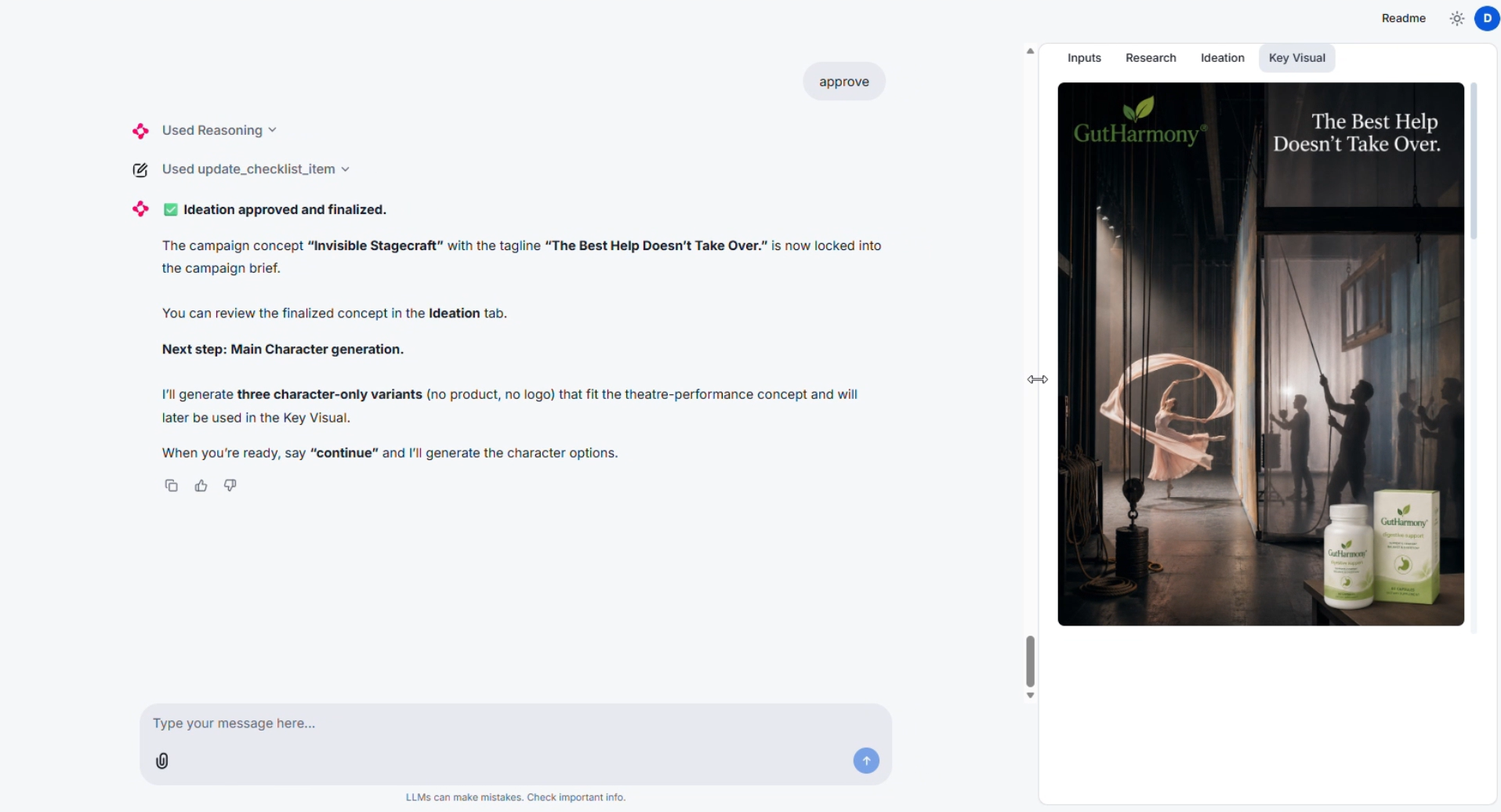
The misalignment surfaced because the process created space for it. People who would eventually use the solution were involved from the start – not to validate a finished product, but to shape one that actually reflected how they worked. That early involvement made a difference: when the solution was ready, it didn’t feel like something imposed from outside.
When a narrow solution grows beyond its original scope
Not every AI project starts with ambitions to scale. One of our other projects began in a market access context, where teams needed faster, more reliable access to product information grounded exclusively in verified internal sources and scientific literature.
The initial scope was intentionally narrow, but during workshops, internal discussions, and early feedback sessions, it became clear that similar needs appeared naturally in other parts of the organization.
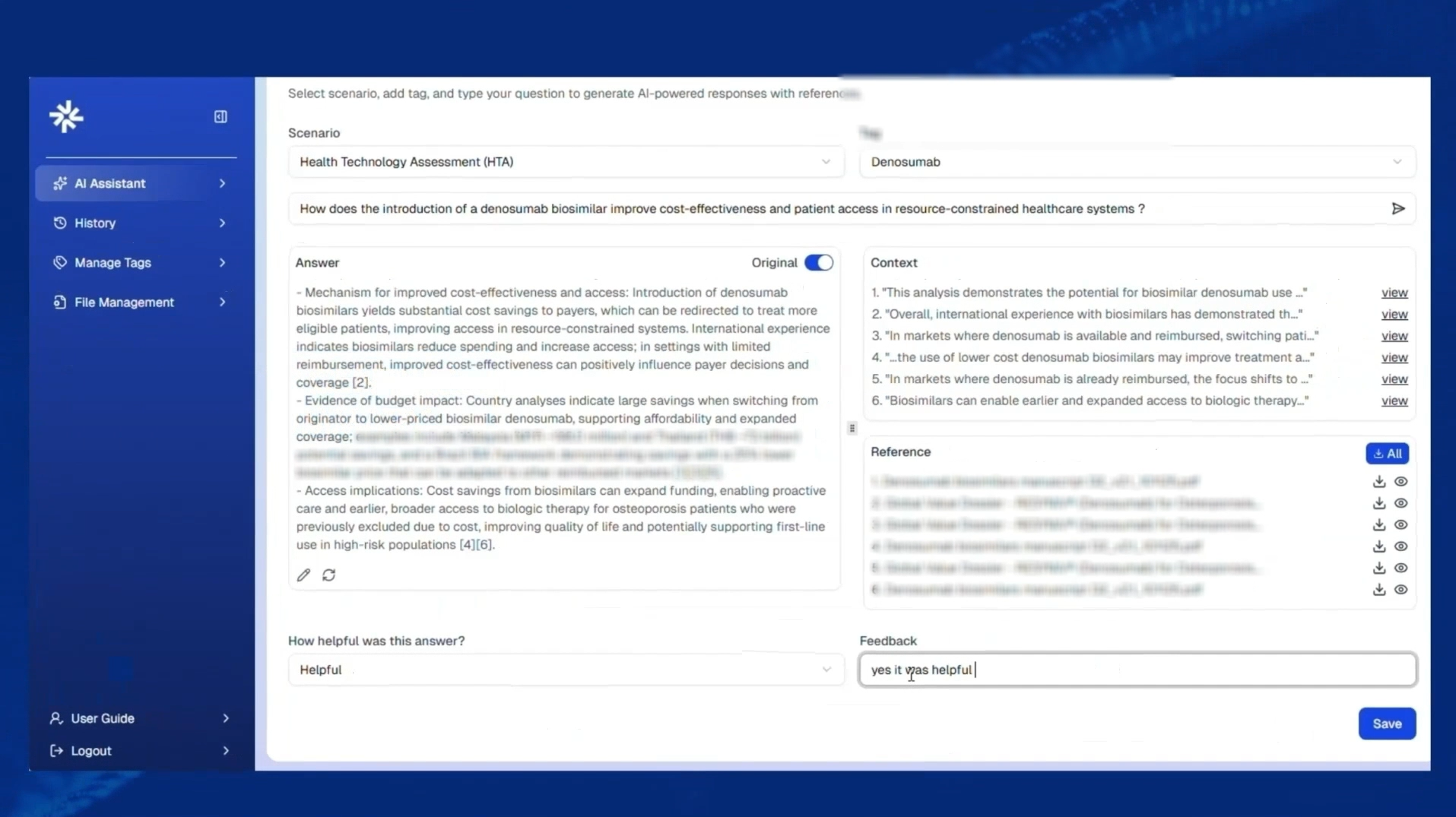
Marketing and sales teams faced different versions of the same challenge: getting up to speed on product knowledge, preparing for HCP conversations, or onboarding new team members. The solution began to expand because the underlying process – accessing and validating trusted product knowledge – was relevant beyond the original team.
What started as a productivity tool for one function became a more widely relevant foundation for the organization. Not by accident, but because the project revealed how product information flows across teams. Sometimes the key is to map the process deeply enough to see where the same friction appears again.
The real difference between a demo and a solution that delivers value
Across these and other projects, four conditions consistently determined whether an AI initiative moved from 'interesting demo’ to something teams genuinely adopted and built into their everyday work:
- The organization understood the real business problem – not just the technical opportunity.
- Users trusted the output enough to act on it in their daily work.
- Teams were involved early enough to shape the solution, not just evaluate it.
- The initiative delivered a measurable improvement: time saved, fewer review cycles, faster access to information, or optimized process.
What made the difference in each case wasn’t a framework on a slide. It was a set of practical decisions made at the right stage: what to test, who to involve, what to measure – and sometimes, when to change direction before the project consumed more than it was worth.
***
All content in this blog is created exclusively by technical experts specializing in Data Consulting, Data Visualization, Data Engineering, and Data Science. Our aim is purely educational, providing valuable insights without marketing intent.